How to split rent when the rooms aren't equal
The master bedroom shouldn't cost the same as the box room. Here's how to split rent fairly when rooms differ in size, light and amenities — with a formula that works.
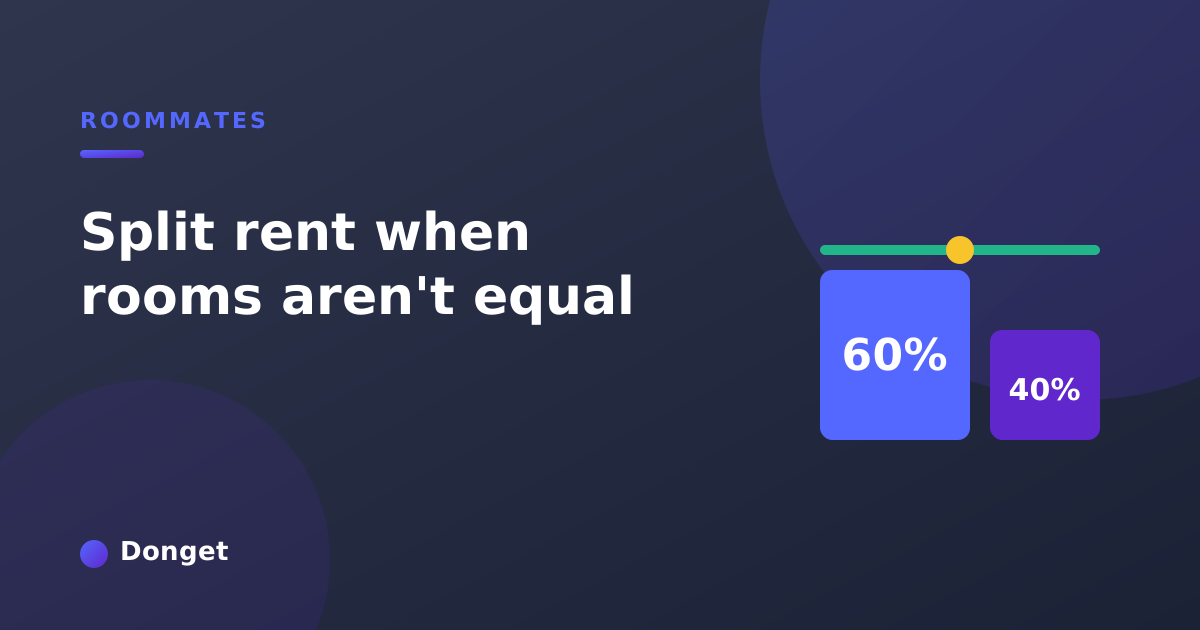
Splitting rent equally is the default, and it works perfectly — right up until the rooms stop being equal. One bedroom is huge with an en-suite and a balcony. Another is barely big enough for a bed and a sad little desk. Charging both the same isn’t simple, it’s just unfair, and everyone in the box room knows it.
So how do you split rent fairly when the rooms genuinely differ? Here’s a method that holds up.
Start by listing what actually differs
Before you argue about numbers, agree on what makes one room worth more than another. Usually it’s some mix of:
- Floor space — the most obvious factor, and the easiest to measure.
- Private bathroom — an en-suite is worth a real premium.
- Natural light — a bright corner room beats a dim one facing a wall.
- Noise — the room over the street is worth less than the quiet one at the back.
- Storage and extras — built-in wardrobes, a balcony, an extra window.
You don’t need a spreadsheet of every factor. You need agreement on which ones matter for your flat.
Fair rent isn’t about measuring to the square centimetre. It’s about a split everyone signed off on before they moved in.
A simple formula that works
The cleanest approach: assign each room a weight, then divide the total rent by those weights.
- Give each room a number that reflects its value — start everyone at 100 and adjust up or down.
- The big en-suite room might be 130, the average room 100, the box room 80.
- Add the weights together (130 + 100 + 80 = 310).
- Each person pays their weight ÷ total × rent.
On £1,800 rent, that’s roughly £755 / £581 / £465. Nobody’s guessing, and the logic is transparent — which is exactly what stops a quiet grudge forming three months in.
Let percentages or shares do the math
You don’t have to run this calculation by hand every month. In Donget, set up a Group for the flat and split the rent Expense by percentages — 42% / 32% / 26% from the example above — or by shares if you’d rather think in whole numbers. Enter it once and the Balances reflect the uneven split automatically, every single month.
That matters because rent is recurring. A fair split you have to recalculate manually is a fair split you’ll eventually stop bothering with.
Don’t let the rooms decide everything
Two fairness notes worth saying out loud:
- Revisit it if things change. If someone swaps rooms or a new flatmate moves in, redo the weights. A split that was fair in year one can quietly drift.
- Keep the bills separate from the rent. Utilities, internet and the weekly shop usually are split equally or by use — bundling them into the room weighting just muddies the water. Track those as their own expenses. (We cover the full system in splitting rent and bills with roommates.)
The short version
- Agree which room features matter to your flat.
- Weight each room and divide the rent by the weights.
- Enter it once as a percentage or share split so it repeats automatically.
- Keep shared bills separate, and revisit the weights when rooms change.
Do that, and the size of someone’s bedroom stops being a monthly argument. It’s just a number everyone already agreed was fair.
Sorting out a houseshare? Download Donget free and set your flat’s rent split in a minute. More on living together well over on roommates use cases.